
Solution architecture is the design of a software system's structure before coding begins. It ensures that the product scales without expensive rewrites through a process of defining components, data flows, integration points, and technology selections. Quintagroup has created designs for more than 20 projects, including FinTech products like Xchange and government-scale procurement platforms like ProZorro.
5 Reasons You Need Solution Architecture
Architectural clarity is necessary for some decisions made during a product's lifecycle. Solution architecture has the most influence, and here’s when:
1. Launching a New Product
Your product can scale, incorporate third-party services, and change from the start with a strong architectural base, saving you money on a six-month rewrite.
2. Modernizing a Legacy System
Transform outdated platforms into modern, flexible systems without disrupting live business operations. Quintagroup migrates systems from Django 1.x apps to microservice-based architectures.
3. Scaling a Growing Platform
When user demand increases, architecture determines whether your system adapts or fails.
4. Migrating to the Cloud
Cloud architecture on AWS, Azure, or GCP requires balancing performance, security, and cost. Without a design phase, cloud bills often grow 2-3 times faster than expected.
5. Integrating Complex Systems
APIs, enterprise ERPs, payment gateways, or government data feeds are all mapped before a line of code is written.
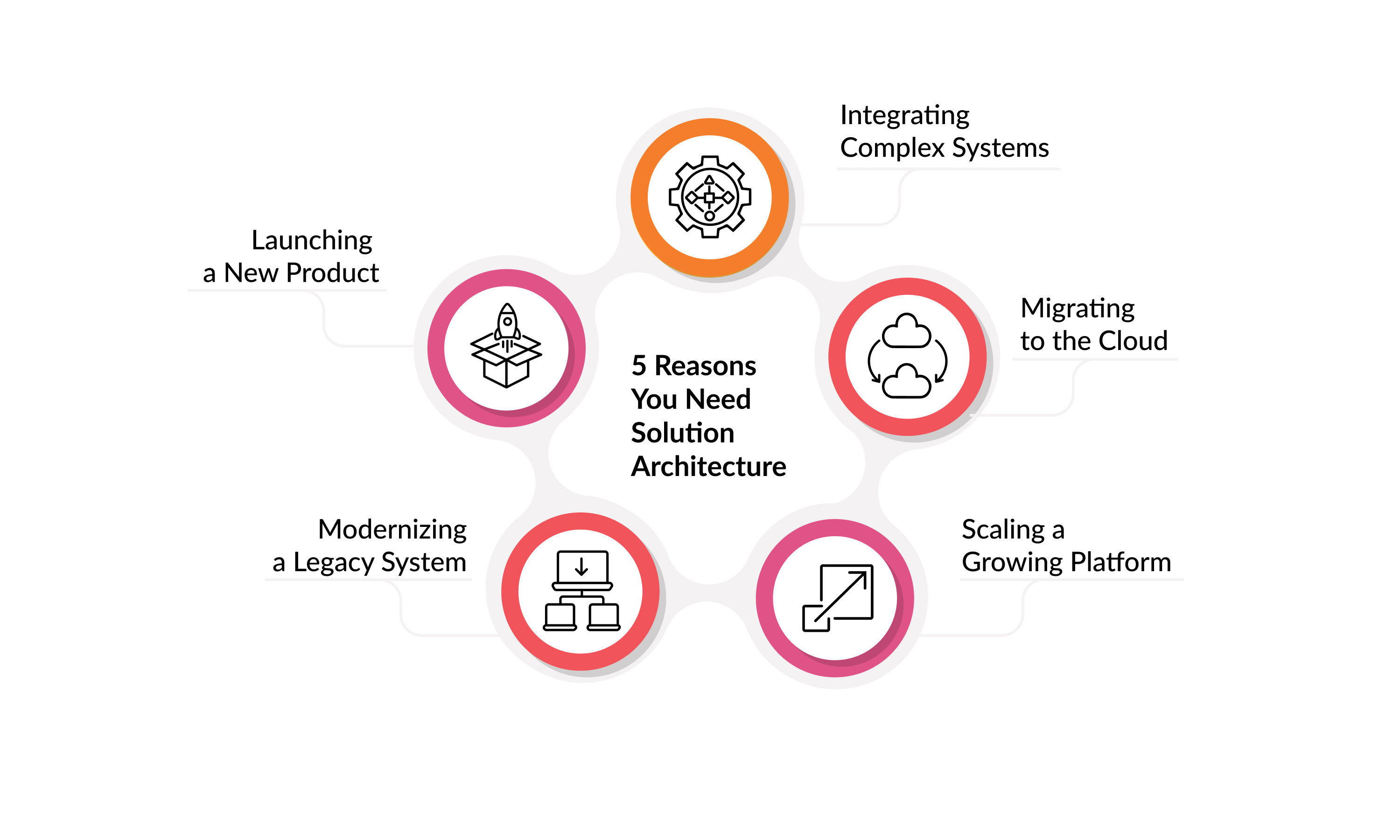
Skipping the architecture step at any of these points is the major source of infrastructure cost overruns and product launch failures.
What Does Quintagroup's Solution Architecture Process Look Like?
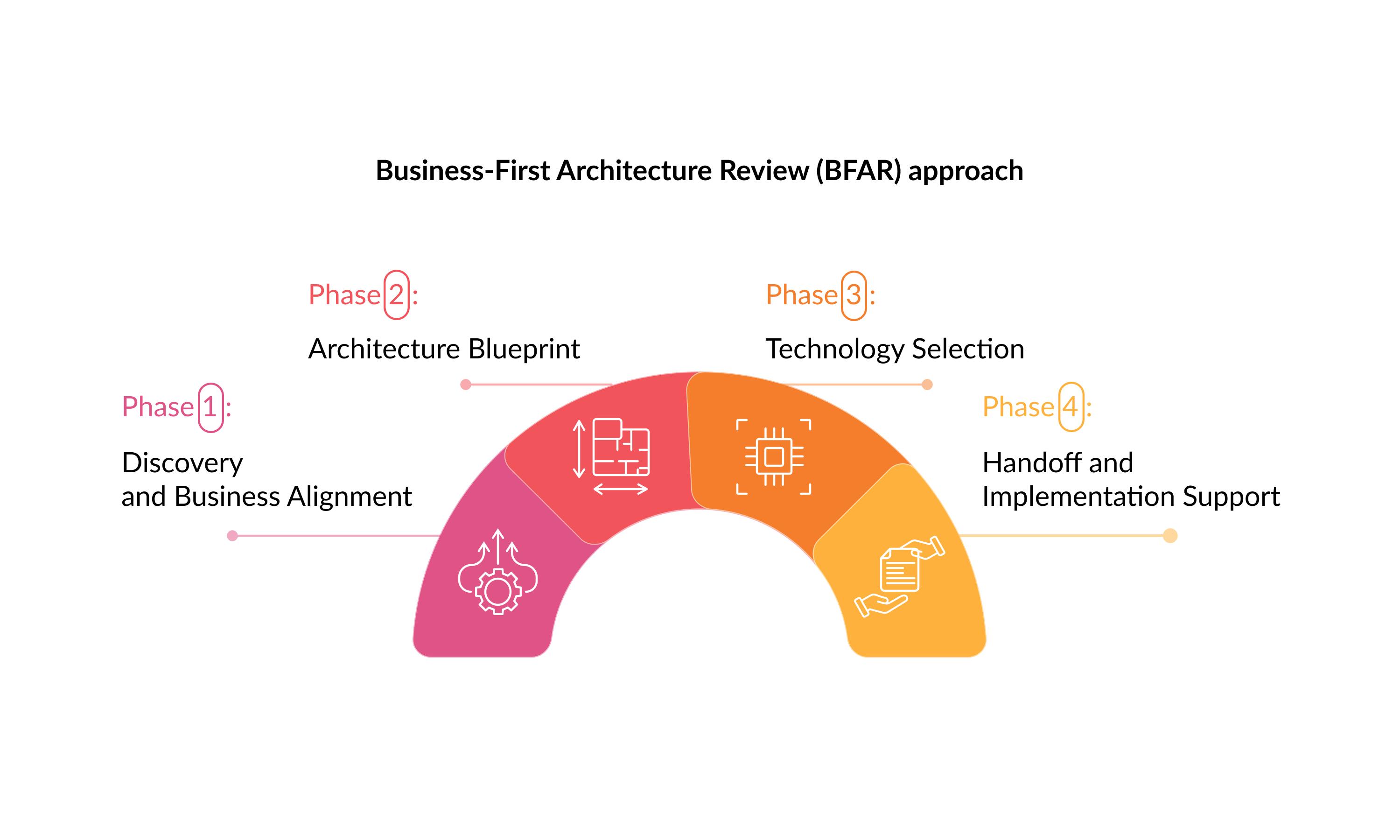
Quintagroup uses a Business-First Architecture Review (BFAR). It is a 4-step process: Discovery and Business Alignment → Architecture Blueprint → Technology Selection → Handoff and Implementation Support:
Phase 1: Discovery and Business Alignment
Quintagroup analyzes business objectives, user scenarios, current systems, and growth estimates. This phase generates a requirements map, which guides all technological decisions.
Phase 2: Architecture Blueprint
The team creates the system's structure, with all the component breakdowns, data flows, API contracts, infrastructure architecture, and security model. Each decision is documented and is based on the client's scalability and pricing needs.
Phase 3: Technology Selection
Quintagroup chooses the stack focused on long-term efficiency. Typical builds include:
- Python/Django for the backend
- React or Next.js for the frontend
- infrastructure from AWS, Azure, or GCP
- containerization via Docker
- data from PostgreSQL or Elasticsearch.
The stack is chosen according to your scalability requirements and 5-year cost forecasts.
Phase 4: Handoff and Implementation Support
Unlike consultants who deliver documents and disappear, Quintagroup architects stay involved through implementation. The team holds a structured handoff session with the client's developers and remains available during the build phase to validate architectural decisions in real time.
Solution Architecture by Industry
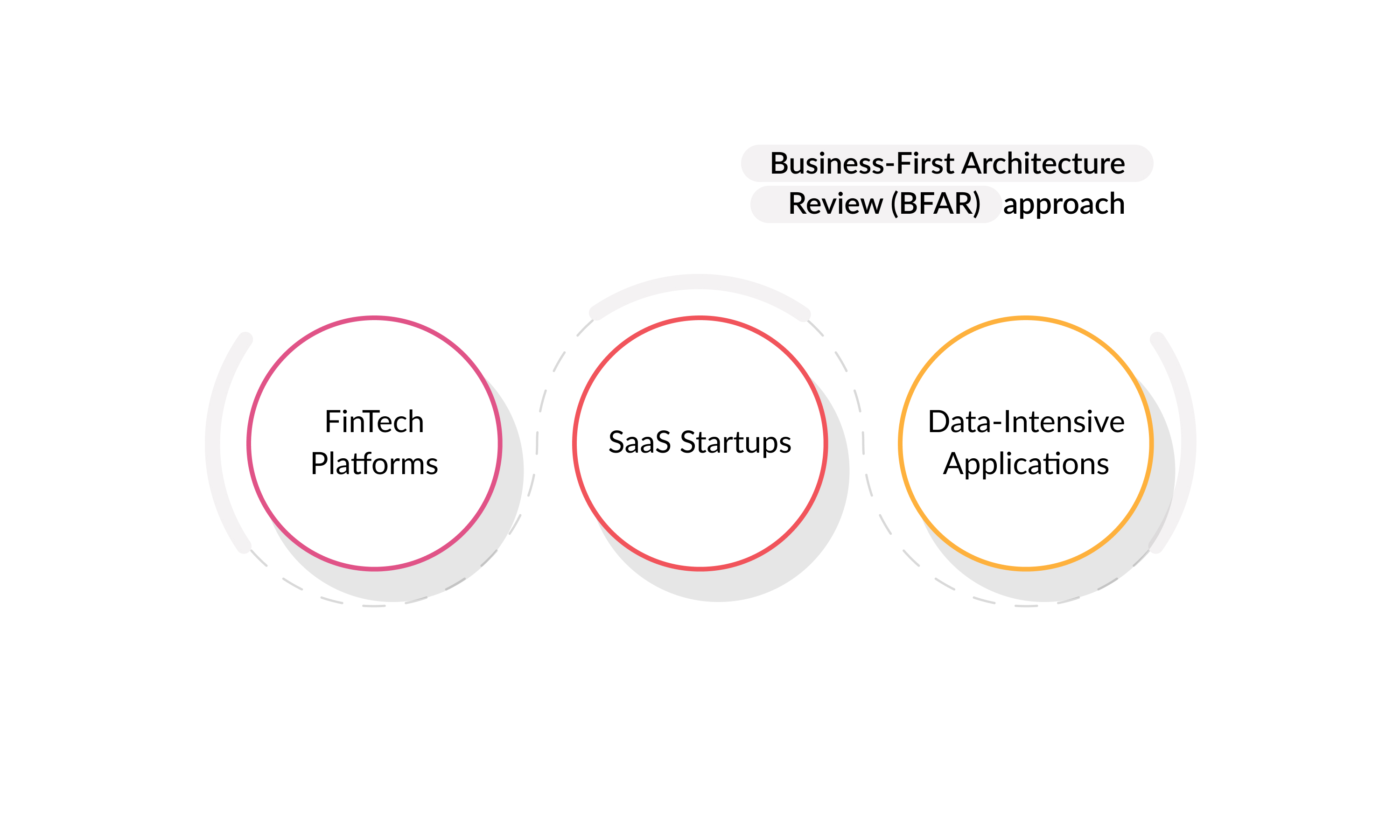
Solution architecture decisions differ significantly by industry. Below is how Quintagroup approaches architecture for three high-demand verticals:
Solution Architecture for FinTech Platforms
FinTech systems face three non-negotiable constraints: transaction reliability, regulatory compliance, and fraud detection latency. Quintagroup designs FinTech architectures with strict data isolation between tenants, event-driven transaction pipelines (typically AWS Lambda + SQS + RDS Aurora), and audit log infrastructure that satisfies PCI-DSS and SOC 2 requirements. This approach reduces projected infrastructure costs by up to 40% while handling 5x the anticipated transaction volume.
Solution Architecture for SaaS Startups
SaaS startups need architectures that are cheap but performant. The critical design decision is the multi-tenancy model: shared database with row-level isolation, schema-per-tenant, or database-per-tenant. Quintagroup evaluates the tradeoffs based on the client's pricing model, compliance requirements, and expected growth trajectory. Typical SaaS stack:
- Django + PostgreSQL (schema-per-tenant) for the application layer
- Celery + Redis for async task queues
- Stripe-integrated billing events flow through a webhook processing pipeline.
Startups that define this architecture before writing the first line of product code reach their MVP 30% faster.
Solution Architecture for Data-Intensive Applications
Quintagroup designs data-intensive architectures with clear separation between the ingestion layer (Kafka or AWS Kinesis), the processing layer (Celery workers or AWS Glue), and the serving layer (Elasticsearch or PostgreSQL with materialized views). The architecture is designed so that data pipeline failures do not cascade into user-facing downtime.
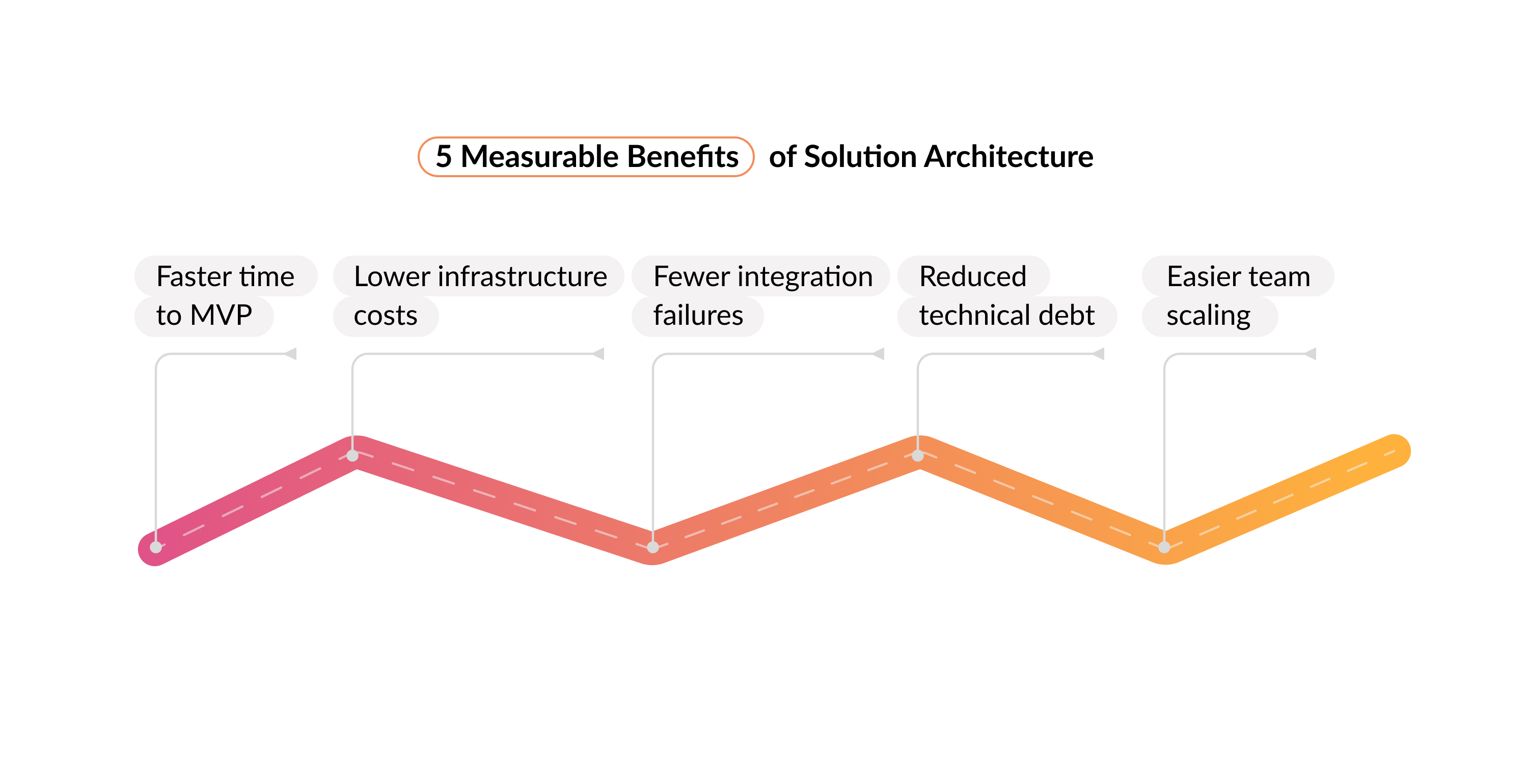
5 Measurable Benefits of Solution Architecture Consulting
Teams that invest in architecture design before development consistently see:
- Faster time to MVP: Startups that define architecture upfront reach their MVP 30% faster by avoiding mid-project rewrites.
- Lower infrastructure costs: Proper cloud architecture sizing reduces wasted spend by 30-50% in the first year.
- Fewer integration failures: Quintagroup's architecture audits identify 80% of integration risks before development begins.
- Reduced technical debt: Teams spend less time on emergency patches and more time on features.
- Easier team scaling: A well-documented architecture lets new developers contribute 40% faster than on undocumented codebases.
What Technologies Does Quintagroup Use for Solution Architecture?
The team works based on the client's requirements and across:
- Backend: Python / Django for robust, maintainable server-side systems
- Frontend: React and Next.js for scalable, SEO-friendly interfaces
- Cloud: AWS (Lambda, RDS, Fargate, S3), Microsoft Azure, and Google Cloud Platform
- Containers: Docker and Kubernetes for deployment and horizontal scaling
- Data layer: PostgreSQL for relational data, Elasticsearch for full-text search and analytics
- APIs: REST and GraphQL, with OpenAPI documentation as a standard deliverable
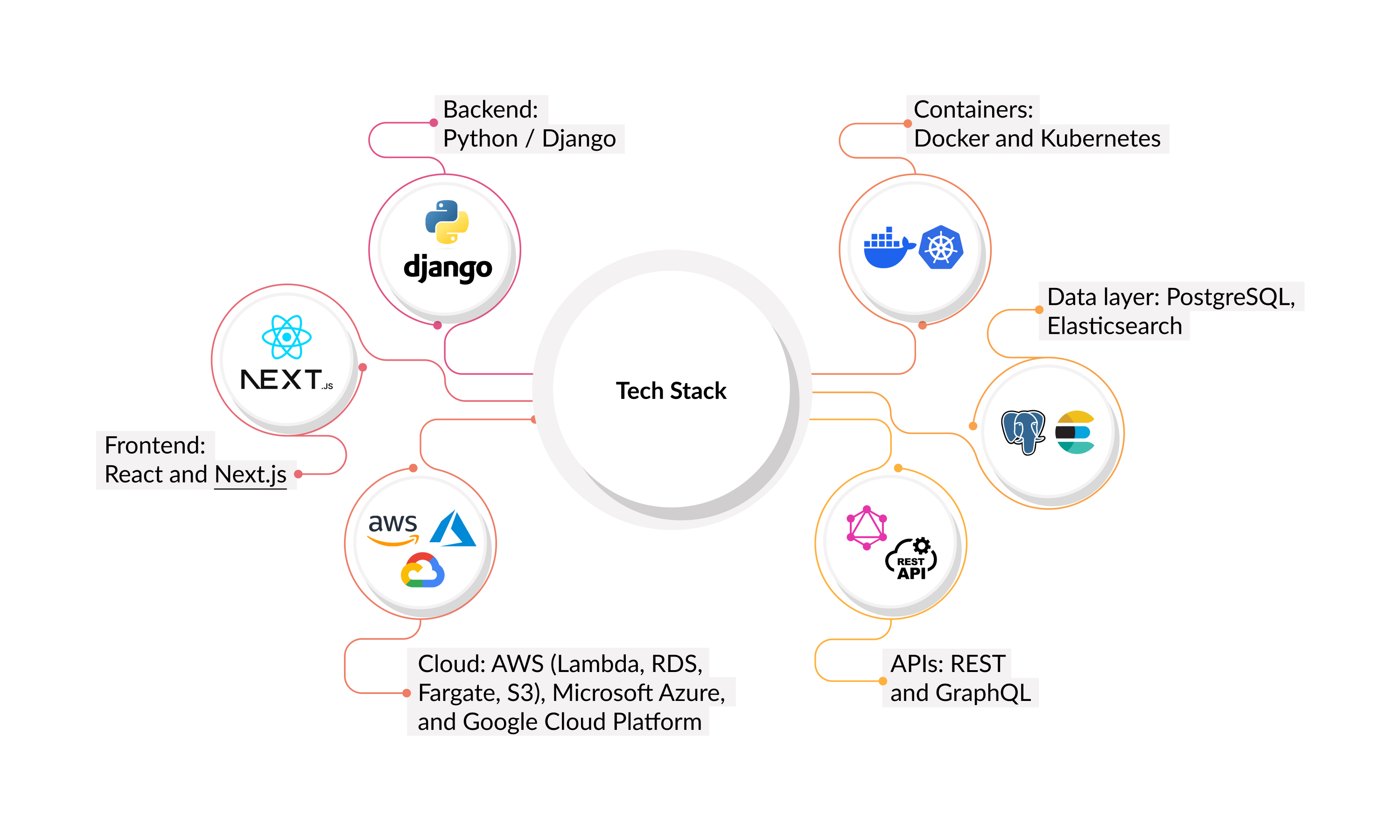
The combination is always tailored. A FinTech product handling sensitive transaction data gets a different architecture than a content-heavy CMS platform.
Why Choose Quintagroup for Solution Architecture?
Quintagroup has delivered architecture work for clients across FinTech, eProcurement, SaaS, and government sectors since 2003. Here is what distinguishes the approach:
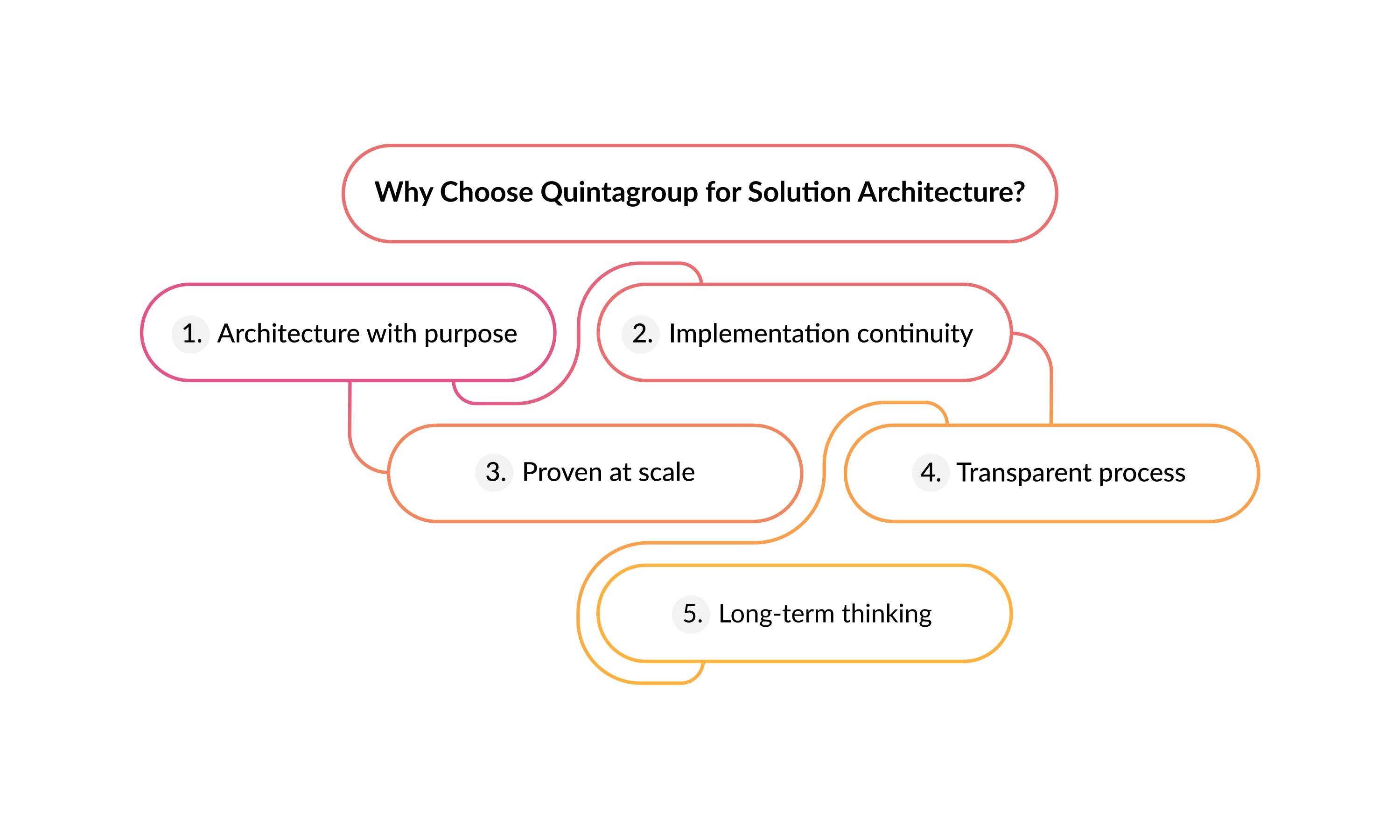
- Architecture with purpose: Every technical decision is tied to your business requirement.
- Implementation continuity: Quintagroup architects stay involved through the build phase. The process is not just documented; the architecture is actually built as designed.
- Proven at scale: Experience includes ProZorro, Ukraine's national public procurement system, handling billions in government contracts.
- Transparent process: Clients receive a full architecture blueprint, technology rationale, and risk register before any development investment.
- Long-term thinking: Systems are designed to evolve over 5+ years, not just to ship the first version.
Start with a 2-Week Architecture Audit
Not sure where your current architecture stands? Quintagroup offers a focused architecture audit for existing systems. This way, we can identify performance bottlenecks, risks, and integration gaps before they become a real issue.
Contact Quintagroup to scope your architecture engagement and receive a fixed-timeline estimate within 48 hours.
Frequently Asked Questions
What is solution architecture and why does my business need it?
Solution architecture is the design of a software system's structure, components, and integration points prior to development. It aligns business objectives with technical decisions, defines the technology stack and data flows, and ensures that the system can scale. Businesses use it to avoid technical debt, reduce infrastructure expenses, and ensure that the product can support real-world development from the start.
When should a company hire a solution architect?
A solution architect is critical at five stages: launching a new product, modernizing a legacy system, scaling a platform to handle more users, migrating to the cloud, or integrating complex third-party systems. Skipping architecture at any of these stages is the leading cause of mid-project rewrites and infrastructure cost overruns.
How long does a solution architecture engagement take?
A typical engagement with Quintagroup takes 2 to 6 weeks, depending on project complexity. It includes discovery, blueprint creation, technology selection, and a structured handoff session with the development team.
What technologies does Quintagroup use for solution architecture?
Quintagroup builds architectures on Python/Django for backend, React or Next.js for frontend, AWS, Azure, or GCP for cloud infrastructure, Docker for containerization, and PostgreSQL or Elasticsearch for data management. The stack is selected based on the client's long-term scalability needs, team expertise, and 5-year cost projections.
How is Quintagroup's solution architecture service different from a general IT consultant?
Quintagroup combines hands-on implementation experience with architectural design. Quintagroup architects remain involved through the build phase to ensure the architecture is built as designed. Clients include government-scale platforms like ProZorro and FinTech products like Xchange.Loans.
How much does solution architecture consulting cost?
Cost depends on project scope and duration. A 2-week architecture audit for an existing system is priced as a fixed engagement. A full greenfield architecture design runs 3 to 6 weeks. Contact Quintagroup with a brief description of your product and team size to receive a scoped estimate.