
The Auction Delivery Framework (ADF) is a Quintagroup-created five-phase methodology for designing, building, and deploying auction systems. It covers the essential steps to create a functional demo environment in 1-2 weeks from kickoff and a full production deployment in 4-6 weeks. Regardless of the kind, industry, or complexity of the auction, Quintagroup applies the ADF to every auction engagement.
Why Auction Systems Require a Structured Delivery Methodology
It is not typical configuration work to build an auction system on top of an ERP platform. The logic introduced by competitive bidding happens not to be covered by conventional modules. These requirements appear later, after development has begun, and are handled inconsistently in the absence of a clear delivery method.
That is why Quintagroup came up with the Auction Delivery Framework. It helps prevent instability by sequencing the work so that business rules are fully specified before development starts, module gaps are honestly assessed before custom code is written, and integration dependencies are mapped before the system goes near production infrastructure. Each phase is fundamental for the success of the next one.
Quintagroup has started applying this approach since 2003 across eProcurement, FinTech, and professional services clients.
Phase 1: Process Discovery
The first step Quintagroup takes to begin every Auction Delivery Framework engagement is a structured analysis of the client's existing auction lifecycle. Quintagroup maps the process of sourcing and cataloguing lots, inviting and authenticating bidders, collecting and validating bids, and making and communicating award decisions.
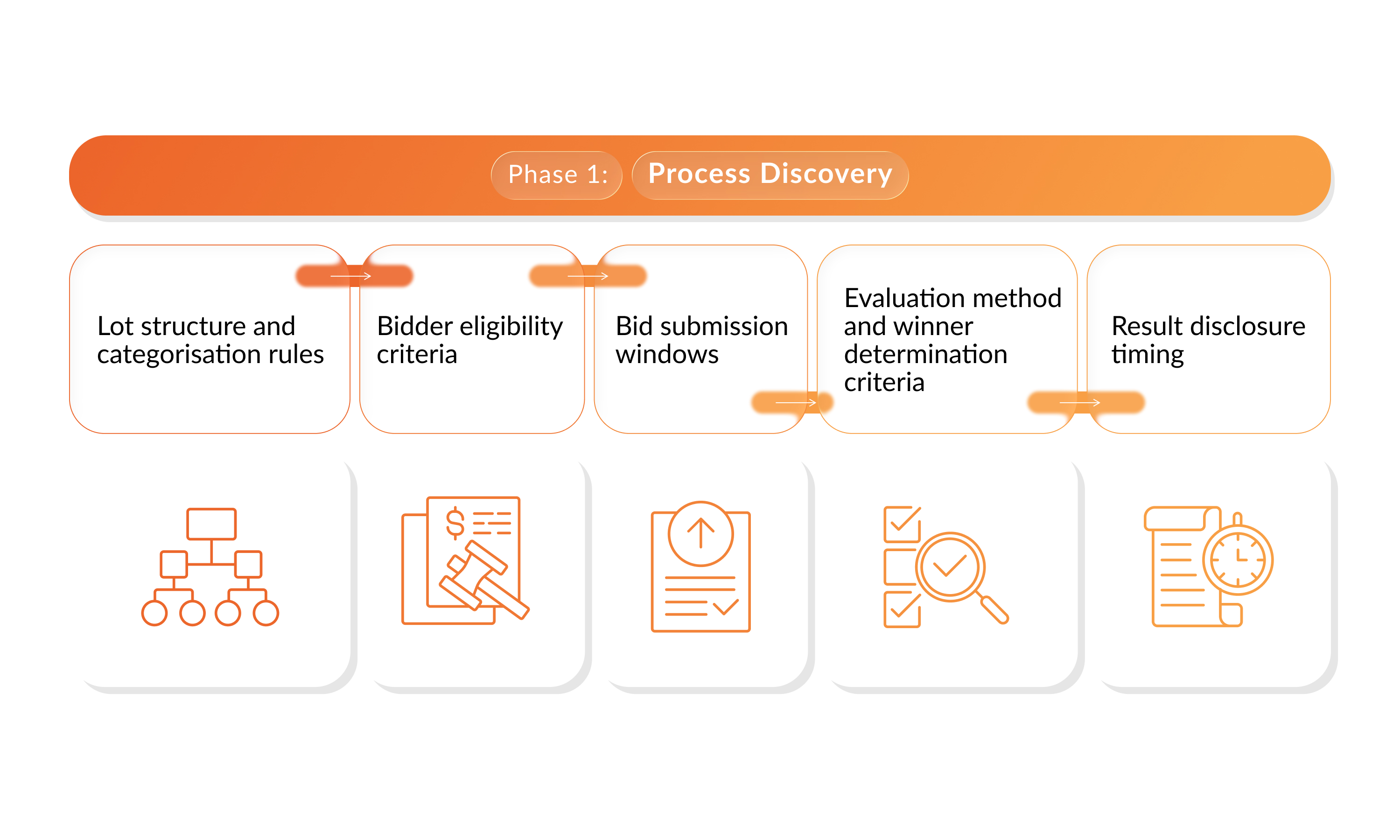
This phase takes three to five days and produces a written specification before any work starts. It helps define:
- Lot structure and categorisation rules
- Bidder eligibility criteria and invitation workflow
- Bid submission windows and deadline enforcement logic
- Evaluation method and winner determination criteria
- Result disclosure timing, format, and participant communication
Phase 2: Module Evaluation
Before writing any custom code, Quintagroup delivers an honest assessment of what is currently available to use. Several auction modules exist that provide viable foundations for lot management and basic bidding workflows. Tailoring them to the client’s requirements saves both time and funds.
This evaluation assesses how much of the specifications an existing module already meets. Where a module delivers 60-70% of the desired functionality, Quintagroup expands it through bespoke development rather than starting from scratch. This approach addresses two common failure problems in auction projects:
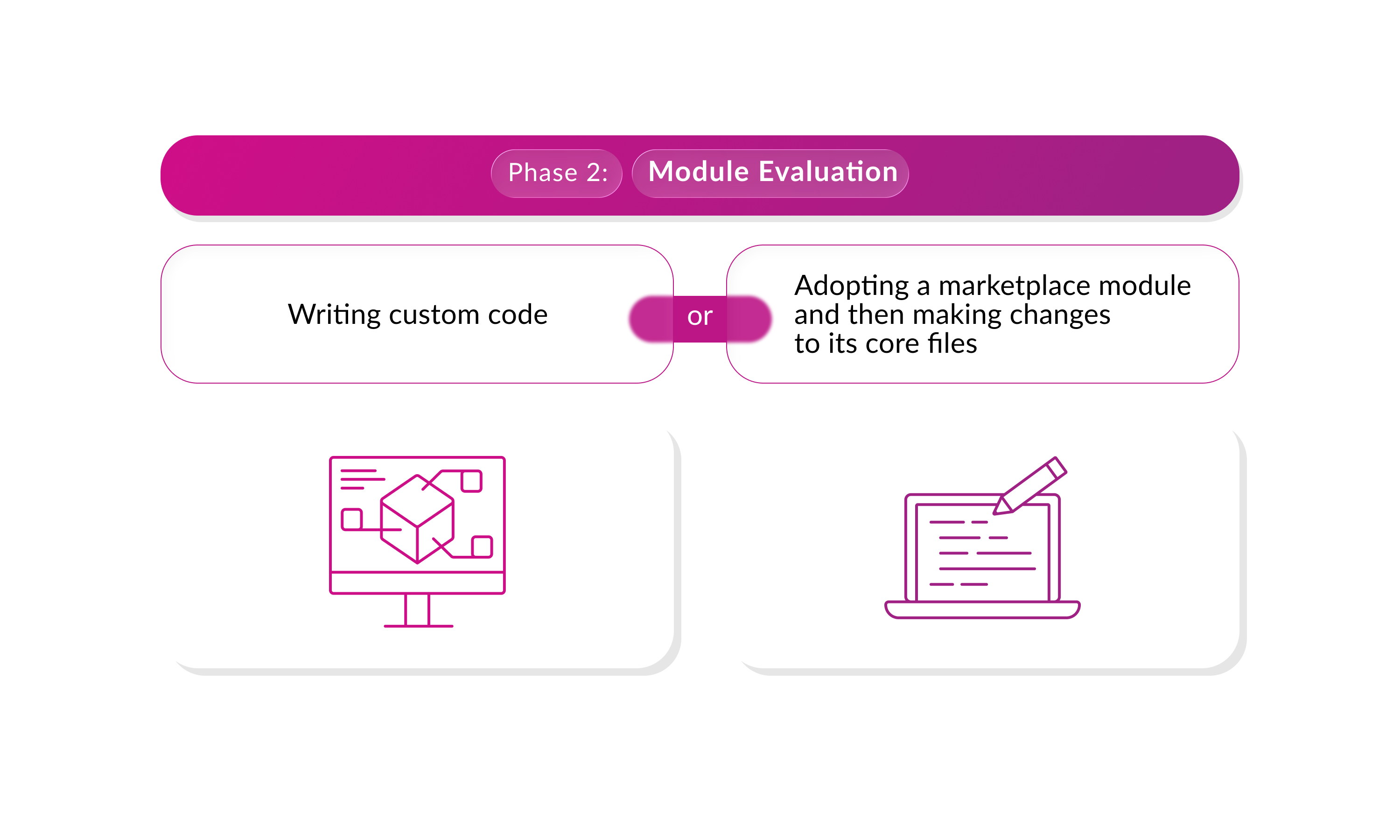
- Writing custom code that duplicates functionality already available publicly
- Adopting a marketplace module and then making changes to its core files to close gaps, so disrupting upgrade compatibility
The output of this phase is a module selection decision and a gap analysis: what the chosen module covers, and what needs to be built.
Phase 3: Custom Development
When standard modules don't meet the requirements, custom logic is used. On ADF engagements, Quintagroup's custom development scope often consists of:
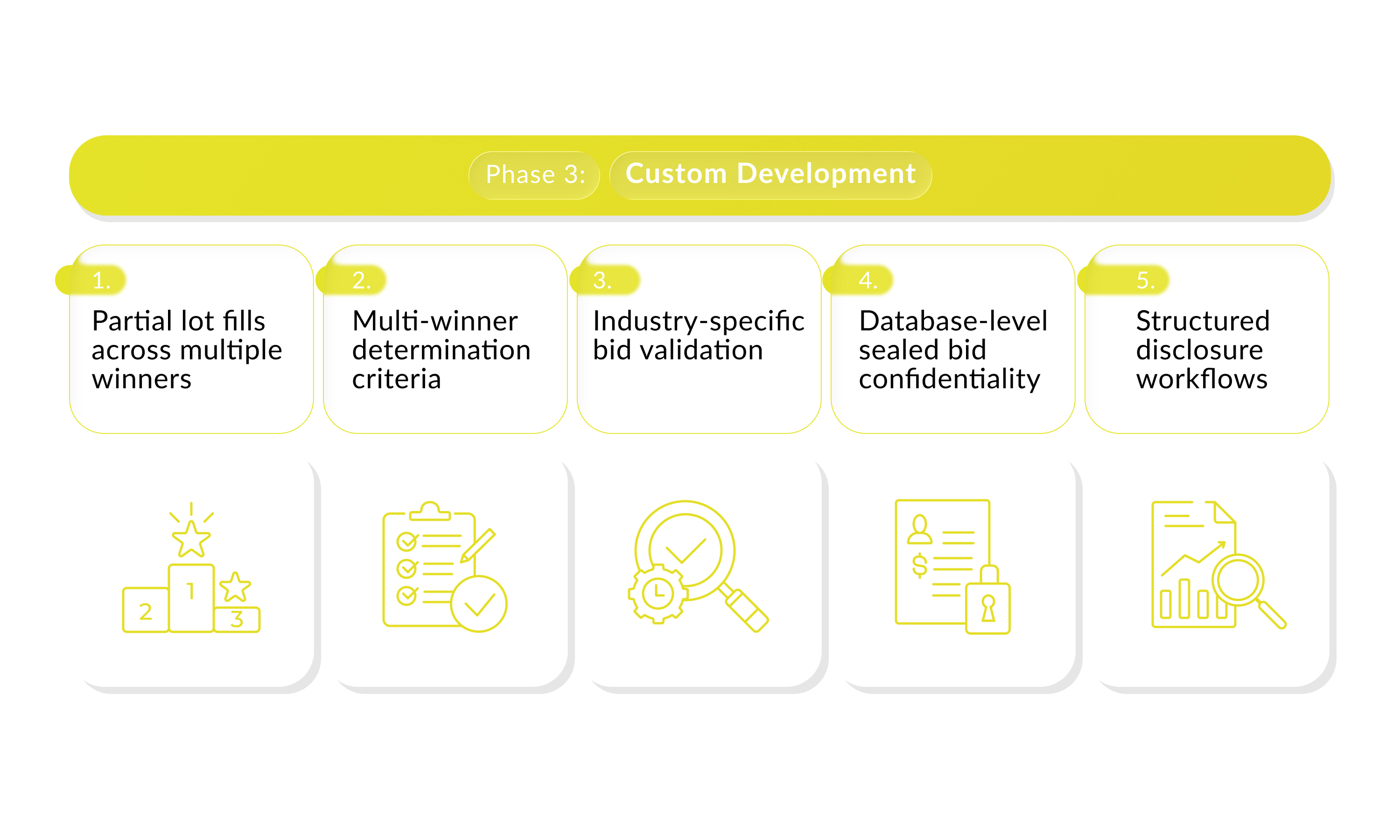
- Partial lot fills across multiple winners: splitting a single lot between the two or three lowest qualifying bidders, weighted by submitted quantity or capacity
- Multi-winner determination criteria: selecting winners based on a combined score across price, delivery timeline, and qualification rating
- Industry-specific bid validation: rejecting bids that fall outside defined price bands or that fail supplier qualification checks at submission time
- Database-level sealed bid confidentiality: encrypting bid values while they are at rest to prevent system users from accessing submitted amounts before the disclosure event
- Structured disclosure workflows: results can be revealed gradually or simultaneously, with timestamps and unchangeable audit log entries at every stage.
Phase 4: Integration and Access Setup
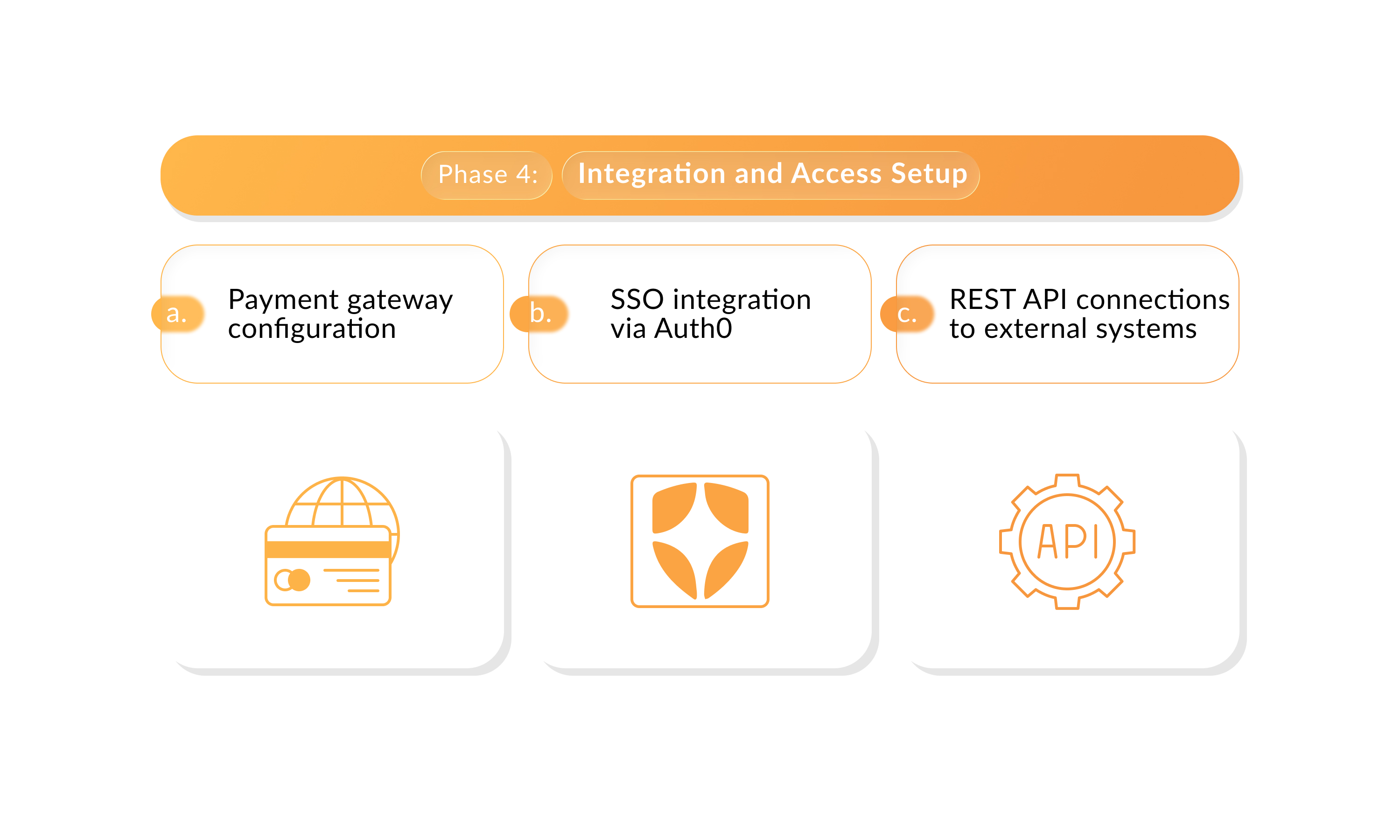
This phase connects the auction system to the client's existing infrastructure. Standard integration scope in an Auction Delivery Framework engagement covers three areas:
Payment gateway configuration
It connects the auction platform to the client's payment processor. Configuration is validated against the client's existing payment infrastructure before it goes live.
SSO integration via Auth0
Allows bidders and administrators to authenticate through the client's existing identity provider. No separate credential set is required. Access control for auction roles is mapped to the client's existing user directory.
REST API connections to external systems
The most popular integration targets are covered, including reporting tools for exporting compliance data, ERP systems for creating purchase orders upon award, and supplier registries for real-time eligibility checks.
Phase 5: Production Launch and Handoff
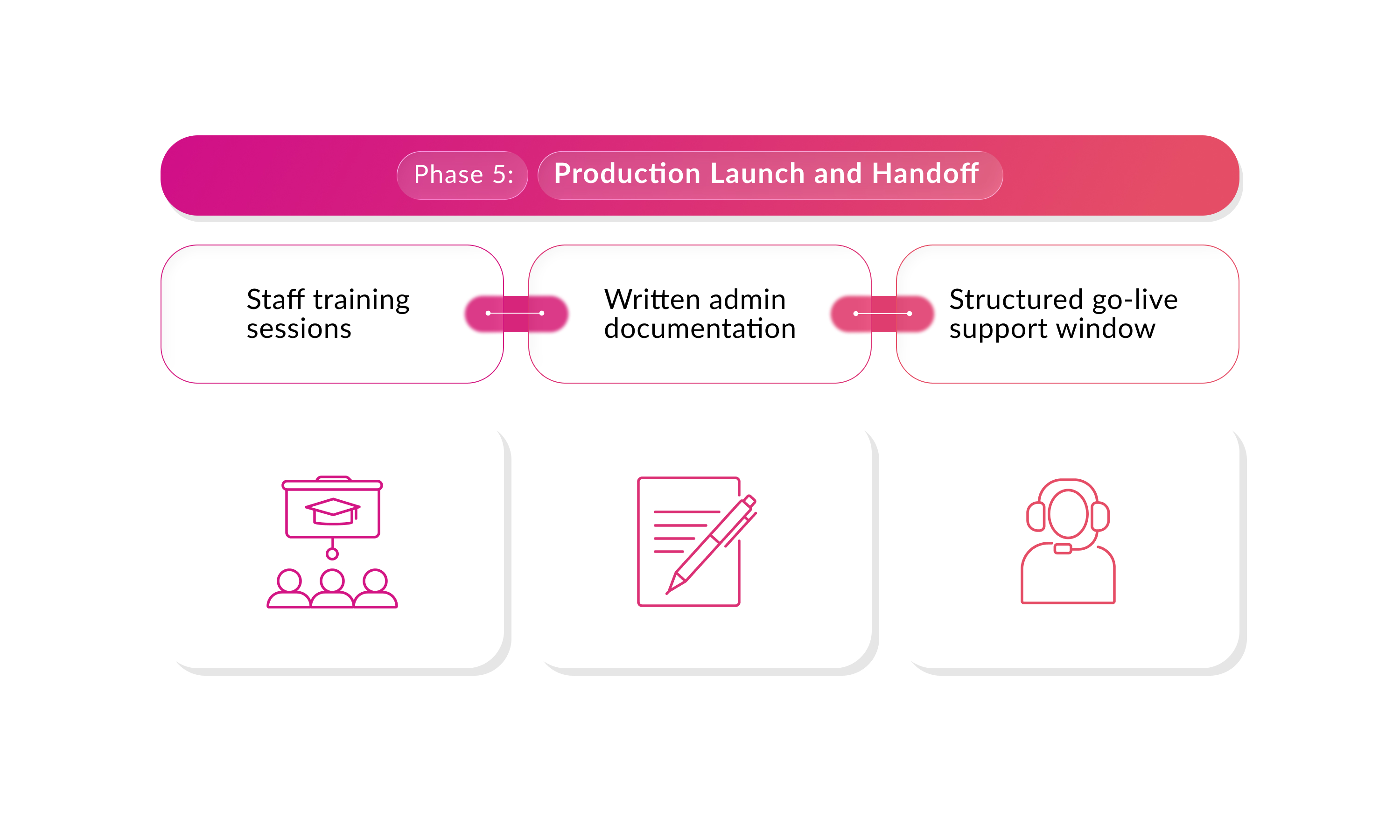
Within one to two weeks of kickoff, Quintagroup provides a functional demo environment. Before production deployment starts, clients can verify logic, test edge cases, and request changes by running the demo against the exact specification rather than a generic prototype. Full production deployment takes 4 to 6 weeks. Handoff includes:
- Staff training sessions for auction administrators and operators
- Written admin documentation covering lot creation, bidder management, auction configuration, bid monitoring, and result export
- A structured go-live support window covering the first live auction event in production
Additionally, Quintagroup provides a maintenance retainer that covers security patches, feature additions, version updates, and module compatibility checks as needs change.
How the ADF Connects to Sealed Bid and Odoo Auction Implementations
The Auction Delivery Framework is the underlying delivery structure. Both sealed bid procurement and Odoo auction customisation are delivered through it.
For sealed bid engagements, Phase 3 focuses on database-level confidentiality and structured disclosure. The sealed bid module is designed so that submitted values are cryptographically protected until the disclosure event occurs.
For Odoo auction customisation, the ADF chooses which marketplace modules to build upon, what custom logic to add, and how the auction system connects to the client's payment, identity, and procurement infrastructure. The client's current Odoo environment serves as the starting point for the full five phases.
Both implementations share the same specification-first approach, module architecture rules, and handoff standard.
Auction Delivery Framework in Practice: Atreus.auction
One of Quintagroup's most direct demonstrations of the Auction Delivery Framework in production is Atreus.auction. It runs real auctions: sellers list lots, qualified bidders compete in timed rounds, and the system determines winners automatically when the session closes. Every bid is timestamped and locked on submission, and no participant, including the platform operator, can alter it after the fact.
For Quintagroup clients who connect Atreu.auction to their Odoo environment, the auction result flows directly into a purchase order without manual re-entry. Atreu.auction is the working proof that the Auction Delivery Framework is an infrastructure that runs live procurement events today.
Build Your Auction System on a Proven Framework
Quintagroup applies the Auction Delivery Framework to every auction engagement. Contact Quintagroup with your auction workflow requirements, and the team will scope a fixed-price engagement and deliver a proposal within 5 business days.
Frequently Asked Questions
What is the Auction Delivery Framework?
The Auction Delivery Framework (ADF) is Quintagroup's five-phase methodology for building auction systems. The five phases are: process discovery, module evaluation, custom development, integration and access setup, and production launch. Quintagroup applies the ADF to both sealed bid and Odoo engagements.
How long does an ADF engagement take from kickoff to go-live?
Quintagroup delivers a working demo environment within 1 to 2 weeks of kickoff. Full production deployment takes 4 to 6 weeks. The timing is determined by the number of auction modalities required, the difficulty of integration, and whether Phase 2 identifies a suitable marketplace module basis or requires a full custom build based on the Phase 1 requirements.
Why does Quintagroup start with a written specification before development?
The written specification produced in Phase 1 prevents building the wrong logic. It defines lot structure, bidder eligibility, bid submission rules, evaluation criteria, and disclosure workflow before any development work begins. This protects both the client's timeline and the project budget.
Does the ADF support sealed bid confidentiality?
Yes. Database-level sealed bid confidentiality is one of the standard custom development scenarios in Phase 3. Submitted bid values are encrypted at rest and inaccessible to any system user. The disclosure workflow is configurable, and every reveal step is timestamped and written to an audit log.
Can the ADF be used for auction types other than sealed bid?
Yes. The Auction Delivery Framework is a delivery methodology, not a fixed product tied to one auction format. Quintagroup has applied it to sealed bid procurement, reverse Dutch auctions, English reverse auctions, multi-lot tenders, and score-based procurement.
What integrations does the ADF cover in Phase 4?
Phase 4 standard scope covers three integration areas: payment gateway configuration for deposit collection or award payment, SSO integration via Auth0 for unified bidder and administrator authentication, and REST API connections to external systems.