
Agentic AI development is the process of creating AI systems that can plan, decide, and execute multi-step activities to achieve a goal with minimal human input. An agentic AI system can call tools, access databases, initiate workflows, and adapt its next action based on the outcome of the previous one.
What Makes an AI System "Agentic" Instead of Just "Generative"?
Generative AI generates output in response to a single instruction. Agentic AI goes further by breaking a goal into phases, selecting which tools or data sources to use for each step, carrying out actions, evaluating results, and deciding what to do next without human intervention at each level.
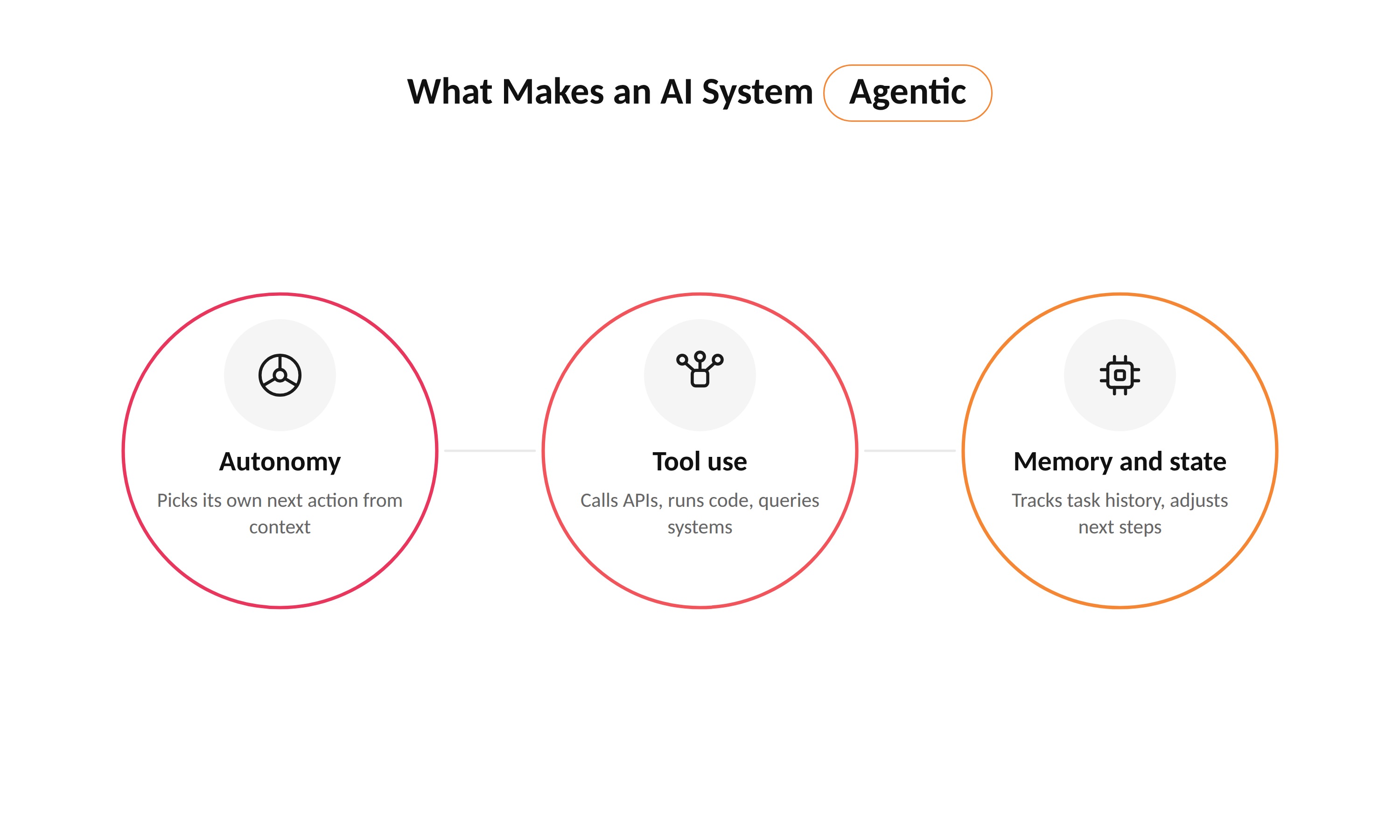
Three characteristics define a true agentic AI system:
- Autonomy: the agent selects its own next action based on context, not a fixed script.
- Tool use: the agent can call APIs, run code, search the web, or query internal systems.
- Memory and state: the agent tracks what has already happened in a task and adjusts accordingly.
For example, a support ticket triaging agent doesn't just draft a reply. It also checks the customer's account status, looks up order history, decides whether escalation is needed, and only then generates a response.
Why Do Companies Invest in Agentic AI Development?
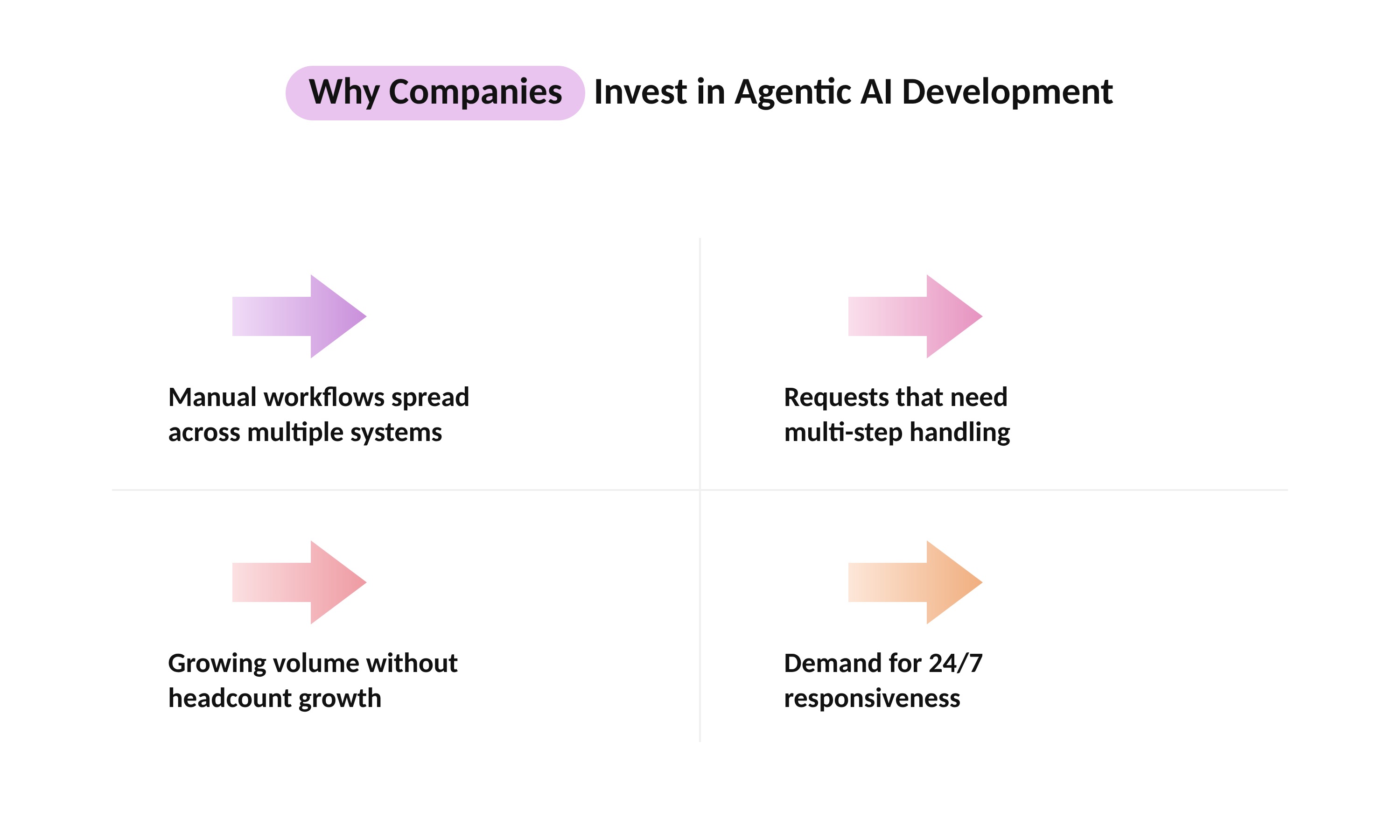
Businesses adopt agentic AI development when repetitive, multi-step processes take up staff time that could be spent on higher-value work. Common triggers include:
- Manual workflows spread across multiple systems: data entry, approvals, and follow-ups that require jumping between a CRM, an ERP, and email.
- Customer or partner requests that need multi-step handling: refunds, onboarding, or compliance checks.
- Growing transaction volume without proportional headcount growth: agentic AI software can absorb volume spikes without adding staff.
- Demand for 24/7 responsiveness: agents don't need shift schedules to process requests around the clock.
What Does an Agentic AI Development Process Look Like?
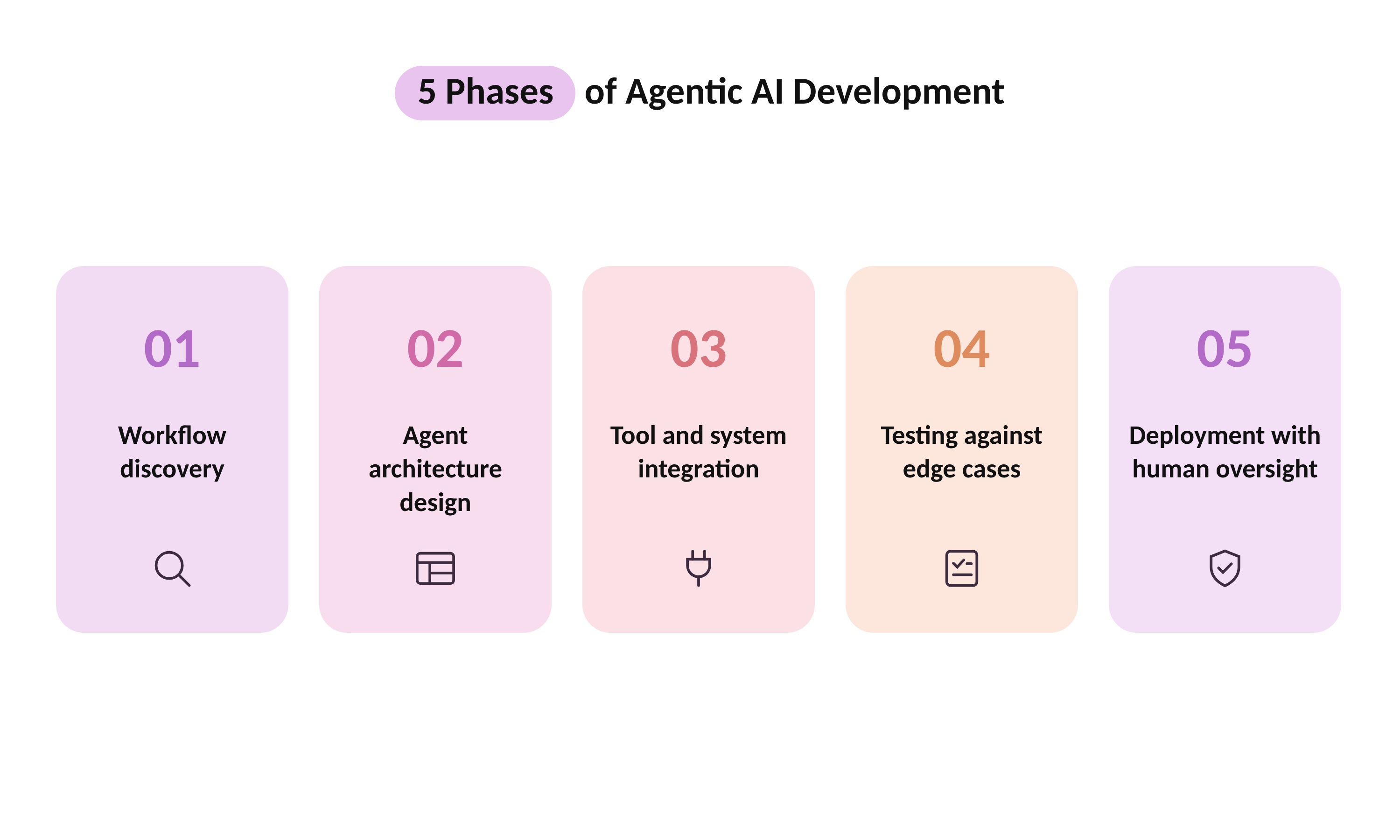
Quintagroup structures agentic AI development into five phases:
- Workflow discovery: Mapping the exact decision points, data sources, and exceptions in the target process before starting the work.
- Agent architecture design: Defining the agent's tools, memory strategy, and escalation paths outside AI.
- Tool and system integration: Connecting the agent to internal APIs, databases, CRMs, or ERPs so it can act.
- Testing against edge cases: Running the agent through exception scenarios before production release.
- Deployment with human oversight controls: Launching with approval checkpoints for high-risk actions, then gradually expanding autonomy.
Quintagroup runs every engagement through what it calls the Agentic AI Deployment Framework (AADF). This structured methodology helps prevent the most common failure mode in agentic AI projects: agents deployed with broad autonomy before their decision logic has been tested against real exceptions.
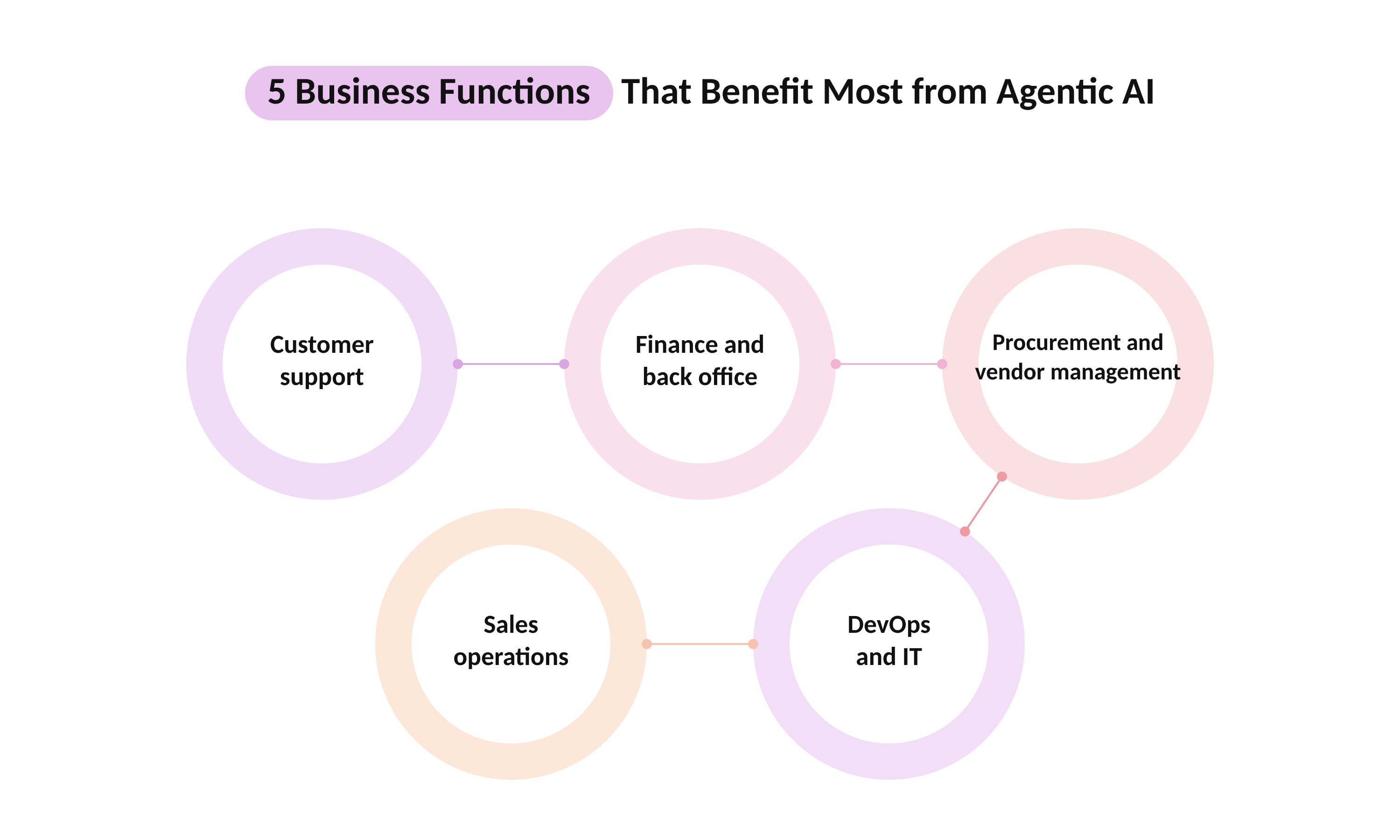
5 Business Functions That Benefit Most from Agentic AI Software
- Customer support: Agents triage tickets, pull account data, and resolve tier-1 requests without waiting for a person's input.
- Finance and back office: Agents reconcile invoices, flag anomalies, and route exceptions for approval.
- Procurement and vendor management: Agents verify documents, check compliance criteria, and track approval chains.
- Sales operations: Agents qualify leads, update CRM records, and schedule follow-ups based on prospect behavior.
- DevOps and IT: Agents monitor systems, triage incidents, and execute predefined remediation steps.
Tech Stack That Powers Agentic AI Solutions
Quintagroup determines the stack based on the workflow's latency, cost, and compliance needs. The core components include:
- Agent orchestration: LangChain and LangGraph for multi-step planning, tool routing, and state management.
- Core logic: Python for agent behavior, business rules, and integration code.
- Model access: GPT-4o, Anthropic Claude, and open-source LLMs, selected per task based on latency, cost, and data-sensitivity needs.
- Memory and retrieval: Vector databases such as Pinecone or pgvector
- System integration: Direct connections to a client's existing CRM, ERP, or internal APIs, so agents take action inside systems the business already runs.
Get an Agentic AI Solution Built Around Your Actual Workflows
Agentic AI development transforms AI from a tool that humans interact with to a system that completes tasks. Quintagroup creates, builds, and integrates agentic AI solutions that are linked to your existing business processes. Contact Quintagroup to scope your workflow. The team will map your process, identify where an agent can safely take action, and return a fixed-cost proposal within 5 business days.
Frequently Asked Questions
What is agentic AI development?
Agentic AI development is a method of creating AI systems that can plan multi-step activities, use external resources, and act toward a goal with minimum human intervention at each stage. An agentic AI system can query databases, use APIs, and alter its next action based on the results of the previous one.
How is agentic AI different from a regular chatbot or generative AI tool?
A chatbot or generative AI technology generates one output per prompt before stopping. Agentic AI divides a goal into phases, determines which tools or data sources each step requires, takes actions, and analyzes results before choosing what to do next. It becomes more like a digital employee executing a task than a text generator.
How long does it take to build an agentic AI solution?
A single-workflow agentic AI solution that connects to one tool or system usually takes 3 to 4 weeks. Multi-agent systems that coordinate several workflows across departments require 6 to 10 weeks. Quintagroup's process consists of workflow discovery, architecture design, tool integration, edge-case testing, and a staggered rollout with human oversight controls.
Is agentic AI safe to use for tasks that involve real business systems?
Yes, if the guardrails are properly set up. Quintagroup creates agents with approval checkpoints for high-risk behaviors, specified escalation channels to a human, and phased autonomy. The agents begin with limited permissions and earn more authority only after performance data validates their reliability in production.
How much does agentic AI development cost?
The cost is determined by the number of systems to which the agent must link, as well as the complexity of its decision logic. For a fixed-cost estimate, send Quintagroup your target workflow and current technology stack.